
Sound Insulation and Carpet Backing Nonwoven Line
Plan the fiber, bonding route, and finished-product tests together.
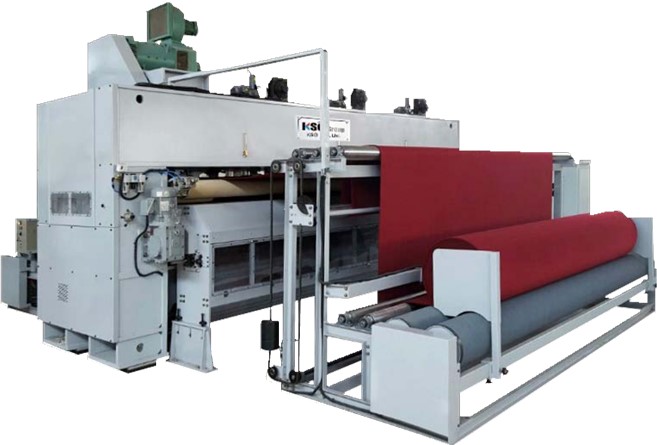
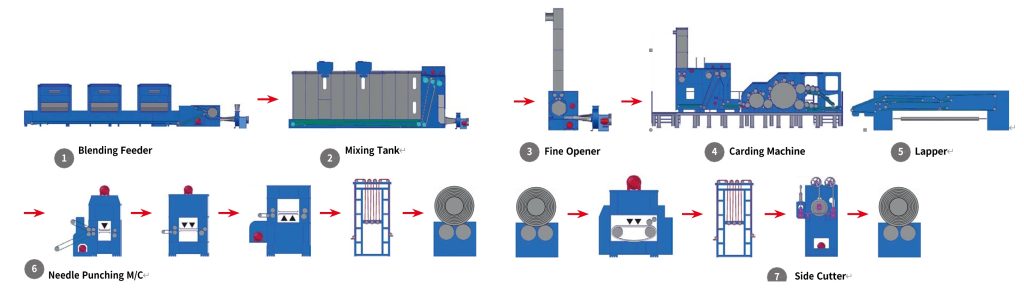
Acoustic felt and carpet substrates can share dry-laid preparation stages, but they need different finished-product criteria. KSG's materials show automotive velour and headliner layouts as well as a separate waste-to-recycled-felt example. These illustrate equipment routes, not proof that a recycled felt meets an automotive specification.
Recovered fiber is an input to assess, not an automotive approval
The catalogue illustrates waste cloth and carpet becoming recovered fiber and recycled felt, including hard and soft board forms. That establishes a recovery concept, not acoustic performance or compliance with a vehicle manufacturer's requirements.
| Buyer input | Why it matters |
|---|---|
| Representative waste and proposed blend | Assess opening suitability and material consistency |
| Required acoustic and physical test methods | Define finished-product acceptance separately from recovery |
| Bonding and molding requirements | Select the forming and finishing route for the intended part |
Source: KSG_카다로그_2023.12.29일_1790837133001.pdf, p. 57 (filename date December 29, 2023; publication date not established). Automotive test and acceptance questions are buyer guidance, not performance claims from this illustration.
Carpet backing
For a carpet substrate, define the required weight, thickness, strength, and behavior during lamination or molding. Select the web-forming and bonding equipment against those requirements rather than against a generic carpet-line specification.
KSG's catalogue shows velour production as a separate configuration. A structured face and a flat backing should not be treated as interchangeable products; provide reference samples when discussing the loom and finishing scope.
Acoustic and sound insulation felt
For acoustic felt, state the required test method and target result as well as weight and thickness. A machinery layout alone cannot establish sound absorption or vehicle suitability.
If reclaimed fiber is proposed, review representative waste samples, blend consistency, coatings, and contamination. The recycling diagram shows preparation and felt production, but does not establish automotive qualification or a guaranteed recovery rate.
If the part needs thermal bonding or molding behavior, specify the binder and downstream process. Confirm forming, heating, cooling, cutting, and handling requirements for that product.
Check whether the product families can share a line
Ask the supplier to compare both products' feedstock, web formation, bonding, and finishing needs. Shared upstream stages do not guarantee that a recipe change is enough to switch products.
Agree trials for each proposed product, including quality criteria, sampling, and changeover review. Define installation and commissioning responsibilities separately from finished-material approval.
Share your product samples, raw-material options, required tests, and output targets with KSG. If recycled fiber is part of the proposal, include representative waste so recovery and finished-fabric suitability can be assessed separately.
Related equipment
Related Technology Guides
Ready to integrate the Automotive Interiors?
Contact our sales engineers to discuss integration, custom configurations, and pricing for your facility.