Needle Punch Nonwoven Machine and Complete Line Supply
Complete dry-laid needle punch lines, from fibre opening through finishing, engineered and installed by one team.
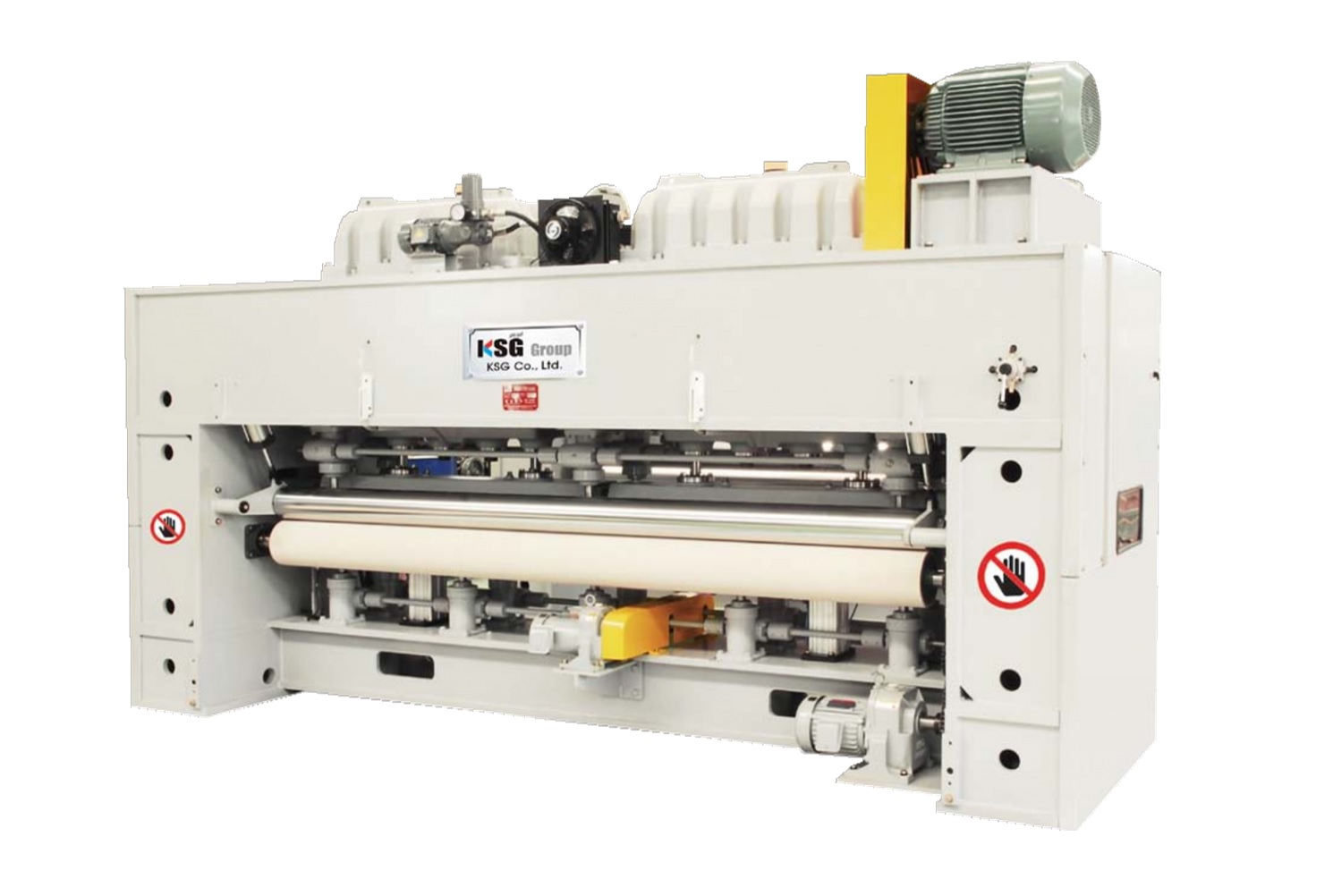
Needle punching is the process we know best. When a buyer asks us for a needle punch nonwoven machine, what they usually need is the whole line behind it: something that takes bales of staple fibre in at one end and puts finished, mechanically bonded fabric out the other. KSG has been building that kind of line for more than 30 years, with installations in over 40 countries, and we handle the job as one package rather than a collection of machines from different suppliers.
What sits in a needle punch line
A needlepunch nonwoven line is a chain of machines that have to be timed to work as one. It starts in the opening room with a super blender, hopper feeder and fine opener that loosen and mix the fibre and meter it out at a steady rate. From there the fibre goes to the carding machine, which combs it into a thin, even web, then to the cross lapper, which folds that web back and forth to build the target weight and width. Only then does the needle punching machine do its work, driving barbed needles through the batt to entangle the fibres into a coherent fabric.
The reason we insist on quoting the full line is that each stage sets the ceiling for the next. A carding machine that lays down a streaky web cannot be rescued by the needle loom, and a cross lapper that drifts in weight will show up as banding in the finished roll. When one team draws the layout and specifies every section, those hand-offs stay clean. That is the practical value of buying the line as a single engineered system.
Downstream of the looms most lines add finishing: a heating roll or bonding dryer line where the fabric needs thermal set, and a side cutter, cross cutter or rotary cutter to square the edges and cut to length. We build those sections too, so the fabric leaves the line already at the width and format the customer sells.
Needle looms and the velour option
The needle punching machine itself is the heart of the process. Needle density, penetration depth and stroke frequency together decide how firmly the batt is bonded and how the surface finishes. For heavier civil and geotextile fabrics we run higher penetration and coarser needle layouts; for softer felts we back off. Most lines use more than one loom in series, a pre-needler followed by one or more finishing looms, so the fabric is consolidated in stages rather than punished in a single pass.
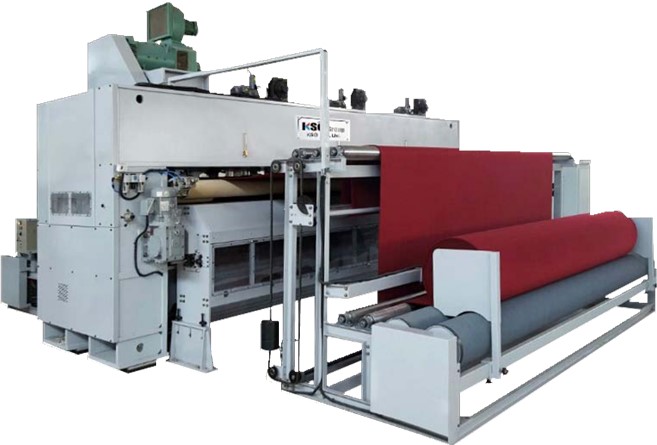
Where a customer wants a structured face rather than a flat felt, we add a velour needle loom. This is what produces the ribbed, cut-pile surface you see on automotive floor and trunk fabrics, and it works by looping fibres over a bed of forked needles and lamella bars. It is a specialised machine and it changes how the line upstream is set, which is another reason to plan the whole line together rather than bolting a velour loom on later.
Needle punching machinery for nonwoven fabric is mechanical bonding, no chemistry, no melting, so the fabric keeps the character of the fibre it is made from. That is why the process spans such a wide range, from soft interlinings to heavy geotextiles, filtration felts and automotive interior stock.
The questions buyers ask us
Three questions come up on almost every needle punch project. The first is weight range. A well-specified line comfortably covers roughly 100 to 1000 gsm, but a line optimised for lightweight interlining is not the same machine as one built for heavy geotextile, so we size the carding and lapping sections around the weights the customer actually sells, not a brochure maximum.
The second is needle density and how it trades against line speed. More needles per stroke and deeper penetration give a firmer, more stable fabric, but they load the loom harder and pull the achievable speed down. There is no universal right answer; it depends on the product. We set that balance during line design and prove it at commissioning, because the honest number is the one the line holds shift after shift, not the peak seen on a good day.
The third is changeover. A plant running several fabrics wants to switch weight or width without losing half a shift, so we specify feed and lapper controls that make those changes quick and repeatable. Getting changeover right is often worth more to a buyer's margin than a slightly higher top speed.
One partner from layout to start-up
Because KSG manufactures the core machines, the opener, carding machine, HS cross lapper and needle punching machine, ourselves, the line arrives as one accountable package. The same engineering team that draws the layout is the team that installs and commissions it on the customer's floor. With plants standing in more than 40 countries, the realities of a new site, foundations, utilities, local labour, are not a surprise to us.
That single-partner approach keeps accountability clear. If the line is not making saleable fabric at start-up, there is no argument between vendors about whose section is at fault, and spare parts and technical support come straight from the people who built the machines. For a factory with downstream converting waiting on nonwoven supply, that short support chain protects the schedule.
If you are planning a needle punch nonwoven line or expanding an existing one, tell us your product mix, target weight range and output. KSG will design the complete line, from opening through needle looms and finishing, quote it, and install and commission it in your plant through to the first saleable rolls.
Related industry guides
Ready to integrate the Needle Punching?
Contact our sales engineers to discuss integration, custom configurations, and pricing for your facility.