
Needle Punched Geotextile Machine and Complete Production Line
The carding, lapping and needling train behind separation, filtration and drainage fabrics.
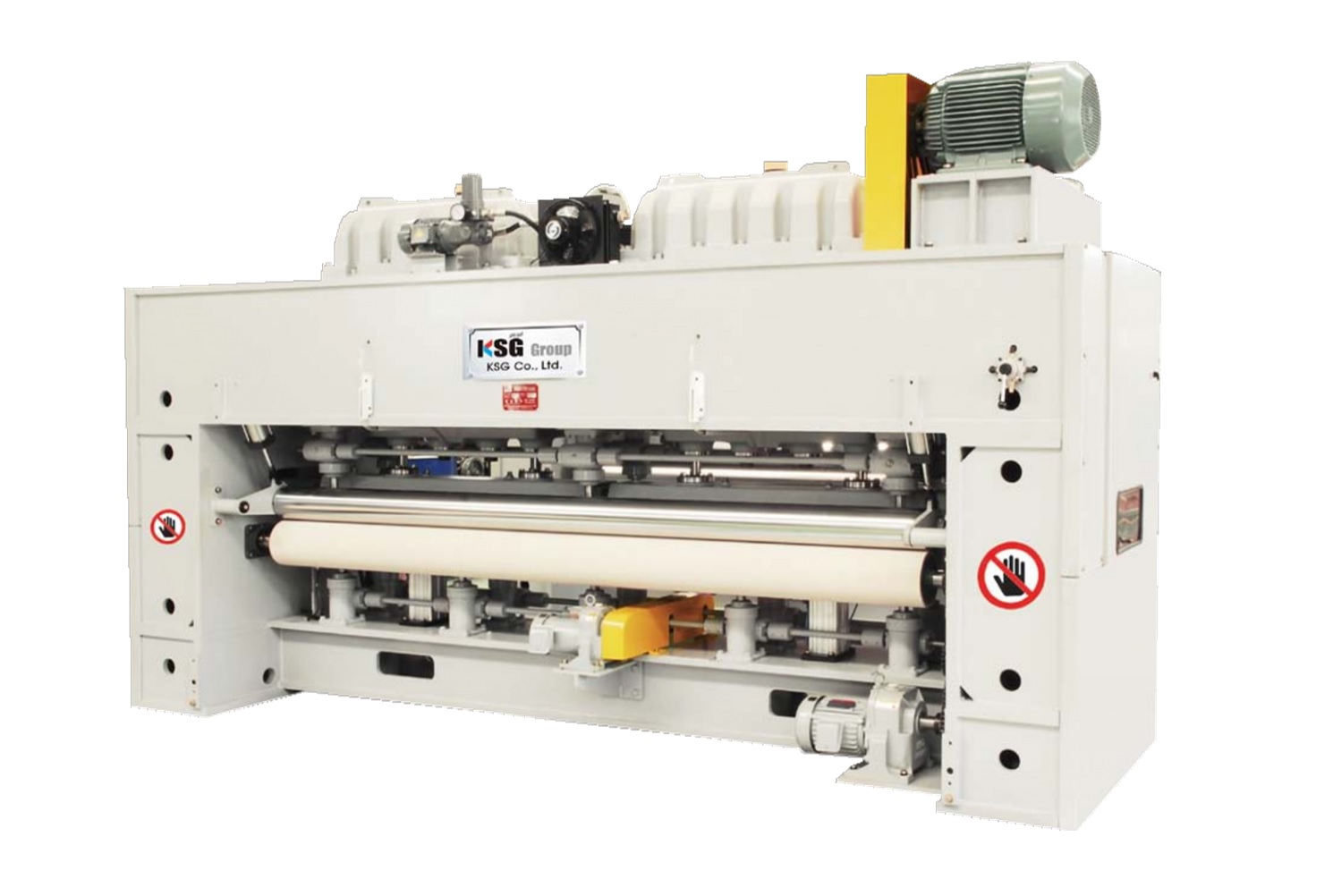
When people say needle punched geotextile machine they usually mean the whole train, not just the loom. The loom does the mechanical bonding, but the fabric's strength, uniformity and CBR puncture performance are decided upstream in carding and cross lapping. KSG supplies the complete geotextile production line as one integrated system, so those stages are matched to each other instead of bolted together from different makers.
What the line is actually made of
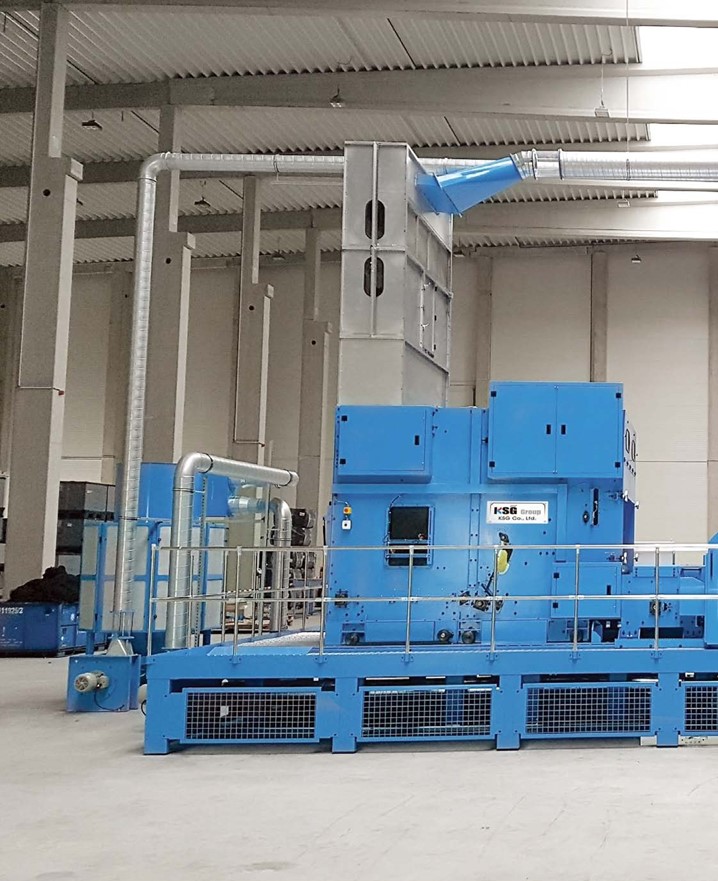
A typical civil-grade line starts with bale opening and blending, then feeds a carding machine that combs the staple into a thin, even web. For heavier fabrics we run two cards in tandem so the cross lapper has enough fiber to build weight without the line crawling. The HS cross lapper folds that web back and forth across the working width, which is where cross-machine tensile strength comes from. Only then does the web reach the needle punching machine.
The needle loom is where the loose batt becomes a coherent fabric. Felting needles drag fiber vertically through the web on every stroke; stroke frequency, penetration depth, advance per stroke and needle board density together set the finished density and strength. Civil fabrics generally need a firmer, more consolidated structure than, for example, automotive felts, so the boards and stroke settings are chosen accordingly.
Weights, widths and line speed
Separation and filtration fabrics commonly sit in the 150 to 400 g/m2 band; reinforcement and protection grades run heavier, sometimes past 800 g/m2. Line speed drops as basis weight climbs, which is normal and expected. Buyers sometimes fixate on a headline metres-per-minute figure, but on a heavy geotextile the honest number is throughput in kg/h at a stable, in-spec web. That is what we quote against.
Wide working widths help civil producers because the fabric is sold by area and installed in wide rolls. We build lines up to roughly 6.5 m useful width, but wider is not automatically better: it only pays if your opening, carding and lapping capacity can keep a uniform web across the full width. A wide line fed by an undersized card just makes wide, uneven fabric. We size the front end to the width, not the other way round.
Commissioning and the first weeks
Installation is where turnkey supply earns its keep. Our engineers set the line, align the carding and lapper, dial in the needle loom, and run trials with your fiber until the fabric meets spec. Getting a needle loom to produce even density edge to edge takes a few iterations; that is normal, and it is far quicker with the people who built the machine standing at the panel.
We also train your operators on the realities: how needle breakage shows up in the fabric, when to rotate or replace boards, how a card clothing change affects web weight, and how to bring the line back cleanly after a stop. A line that is easy to restart after a shift break is worth a lot more over ten years than one that shaves a minute off a spec sheet.
KSG Group can supply this line as a package, from layout drawings through the carding machine, cross lapper and needle punching machine to installation and start-up on your floor. Tell us your fabric grades and output targets and we will propose a configuration and a delivery timeline.
Related equipment
Related Technology Guides
Ready to integrate the Civil & Construction?
Contact our sales engineers to discuss integration, custom configurations, and pricing for your facility.