
Turnkey Planning for Dry-Laid Nonwoven Plants
Define the equipment, line interfaces, site work, and start-up responsibilities in one project scope.
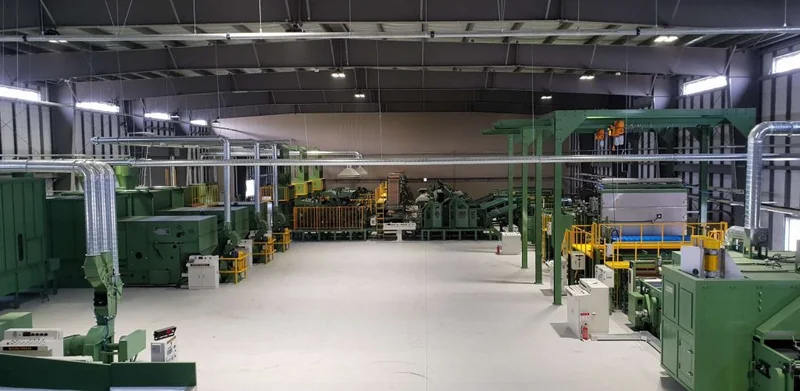
A process drawing is a starting point, not a plant specification
The supplied drawings show different routes for recycled felt and polyester geotextiles. Select the route around the material and product; do not combine all listed machines into one standard plant.
| Source example | Main route | Buyer decision |
|---|---|---|
| Recycled felt | Scrap cutting, opening, cleaning, storage, feeding, forming, drying, and cutting | Waste condition and intended felt use |
| Polyester geotextile | Fiber preparation, carding, cross lapping, staged needle punching, and cutting and winding | Fabric specification and acceptance tests |
| Project interfaces | Equipment connections, controls, utilities, and site work | Supplier and buyer responsibilities |
Does a turnkey proposal include all site work?
Not automatically. Ask the quotation to identify foundations, lifting, local labor, power distribution, ducting, utilities, installation, and acceptance responsibilities.
Sources: RECYCLE_FELT_PROCESS_도면_1790837152412.pdf, p. 1; FLOW_CHART_1790837152411.pdf, p. 1. Publication dates are not stated. These are configuration examples; project-interface questions are buyer guidance.
Five areas to evaluate in a turnkey proposal
Turnkey Integration
Opening, carding, cross lapping, needling and drying draw on different specialties. KSG coordinates these stages within one project scope, reducing the interface decisions the buyer has to resolve between suppliers.
Project Schedule
Build the schedule around engineering approval, manufacturing, inspection, shipping, site readiness, installation, trials, and acceptance.
Comparable Project Cost
Compare equipment, exclusions, site work, utilities, commissioning, training, spare parts, and lifecycle assumptions on the same basis.
Support and Lifecycle Scope
Commissioning and service matter long after delivery. KSG emphasizes an ongoing relationship with the plant, with training, parts and support responsibilities set out for the selected equipment.
Verifiable Evidence
KSG's project history includes equipment supplied to Japan, the United States and Bangladesh. Discuss an appropriate factory review, operating-line presentation or material trial to see how a proposed solution relates to your own production.
Nonwoven equipment engineering since 1994
KSG Group was founded in South Korea in 1994. The group coordinates specialized equipment companies to supply individual machines, connected production stages, and broader plant-installation scopes.
The appropriate scope depends on the buyer's product, raw material, output, process, site, utilities, automation requirements, and local project responsibilities.
Define requirements for the destination site
Applicable machinery safety, electrical, environmental, documentation, and inspection requirements vary by destination and project. State the required standards in the RFQ and confirm the evidence and deliverables included in the proposal.
Factory visits, equipment inspections, sample trials, and operating-line media can support technical review. The exact inspection and acceptance scope should be agreed before the order.
Engineering that pays attention to the operator
A useful line proposal connects the product specification to the machine sequence. KSG's materials show dry-laid opening, carding, cross lapping, needle punching, drying, and finishing, as well as a separate scrap-to-recycled-felt process example.
These layouts are starting points, not universal configurations. Confirm material handling, controls, maintenance access, dust management, and site utilities for the particular product and building.
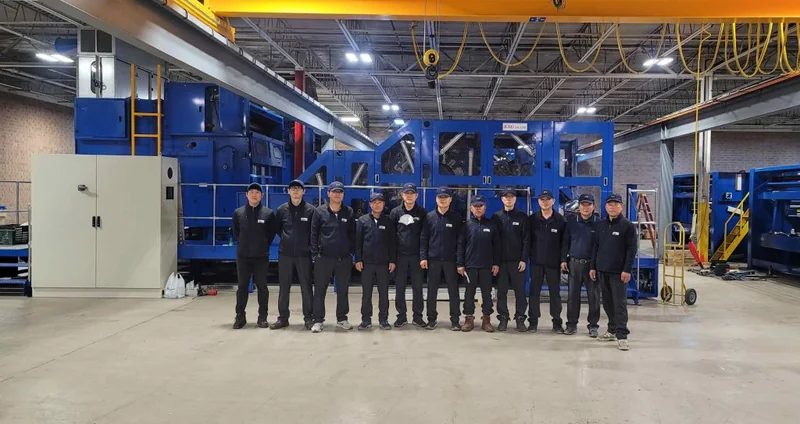
What KSG brings to the production floor
A nonwoven line has to work as a whole. KSG brings the equipment makers into the same engineering discussion, so feeding, web formation and finishing can be planned around the fabric you need to sell.
One coordinated machine train
Opening, carding, cross lapping, needling and drying draw on different specialties. KSG coordinates these stages within one project scope, reducing the interface decisions the buyer has to resolve between suppliers.
Equipment you can evaluate in context
KSG's project history includes equipment supplied to Japan, the United States and Bangladesh. Discuss an appropriate factory review, operating-line presentation or material trial to see how a proposed solution relates to your own production.
Support considered before the order
Commissioning and service matter long after delivery. KSG emphasizes an ongoing relationship with the plant, with training, parts and support responsibilities set out for the selected equipment.
Choose the stages your product needs
The catalogue describes the following equipment families. Specify which machines and connections are included in your project:
Opening Line
Scale hopper, cylinder opener, super blender, conveyor feeder opener, mixing tank & feeder, control hopper, fine opener
Carding Line
Hopper feeder, vertical hopper, carding machine, dust filter, magnetic trap, rotary damper
Cross Lapper and Advanced Processing
HS cross lapper, needle punching machine, velour needle loom, waste picker
Dryer Line
Heating roll, cooling device, side cutter, cross cutter, resin padding dryer, bonding dryer for carpet and artificial fibers
Fiber Recycling Line
Recycling machine, rotary cutter, 3-mountain waste opener, trimming waste opener, pulverize cutter
Packing Line
Cup sealer, automatic filling machine, setup box, cartoner, wrap-around casher
KSG's confirmed supply focus is dry-laid nonwoven equipment, not spunbond, meltblown, spunlace, or airlaid manufacturing lines. Fiber suitability, working width, output, heating conditions, and automation must be agreed for the selected configuration. Catalogue values from different machines should not be combined into a plant-wide performance range.
Equipment and line-operation videos
Production-line installation view
Robotic handling equipment
Nonwoven plant equipment view
Planning a new line or a full plant?
Share your product sample, raw material, target output, and site drawing so we can discuss a suitable equipment and installation scope.
Contact KSG Group