
Fiber Recycling Machinery Line
KSG's materials show a textile-waste recovery route from scrap through cutting and opening to recycled fiber, with a separate forming, drying, and cutting section for felt. The process drawing is a configuration example, not a guarantee that every waste stream can become usable felt.
How this stage contributes to the line
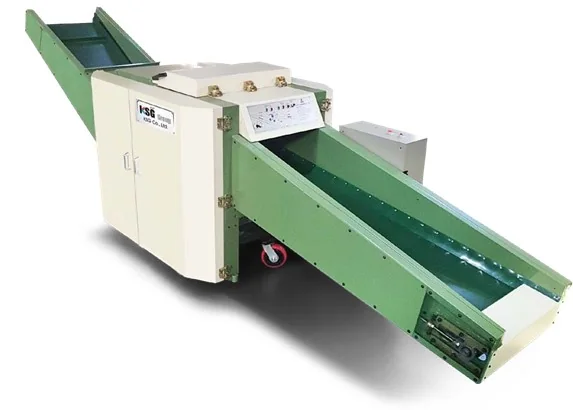
Useful recovery begins with the right cutting and opening duty. KSG's range separates textile-scrap cutting, progressive fiber opening and edge-trim recovery. The recycled-felt layout connects these operations to cleaning, storage, forming and drying, helping buyers discuss a complete reuse route.
Explore KSG's integrated engineering approach Textile Waste to Recycled FeltFrom textile scrap to felt: the supplied process example
The drawing shows a scrap-to-felt route with fourteen numbered equipment positions. It does not show carding or needle punching in this route, and it does not establish recovery rate, cleanliness, or suitability for every waste stream.
-
1
Two rotary cutting stages
Scrap enters the first and second rotary cutters, numbered 1 and 2 in the drawing.
-
2
Hopper feeding
The hopper feeder is position 3, before the successive opening units. An air separator, numbered 7, is drawn separately above the hopper; it is not a serial stage after the openers.
-
3
Successive opening
Three opener positions, 4–6, are shown in sequence. The required opening arrangement must be confirmed for the waste.
-
4
Cleaning after opening
The cleaning machine, position 8, follows the openers and connects to storage. The drawing does not quantify removal efficiency or identify every contaminant.
-
5
Storage and feeding
Material passes to the storage room, position 9, then the conveyor feeder and mixing feeder, positions 10 and 11.
-
6
Felt forming
Position 12 is labeled “FREES FORMER” in the source and forms the material before the dryer. Confirm the forming method in the proposed configuration.
-
7
Drying and final cutting
The dryer, position 13, is followed by cutter equipment at position 14. No drying temperature or finished-felt specification is given in this drawing.
Can mixed textile waste be used without trials?
Do not assume so. Supply representative samples and identify composition, coatings, attachments, moisture, and contamination. Agree both the recovered-material criteria and the intended finished-felt tests.
Is the pulverize cutter part of this felt process?
It is not labeled in this drawing. The catalogue describes pulverizing for a different waste-crushing duty, so it should not be inserted into this route without a confirmed process design.
Source: RECYCLE_FELT_PROCESS_도면_1790837152412.pdf, p. 1 (publication date not stated). Related waste-to-fiber-to-felt examples: KSG_카다로그_2023.12.29일_1790837133001.pdf, p. 57 (filename date December 29, 2023; publication date not established).
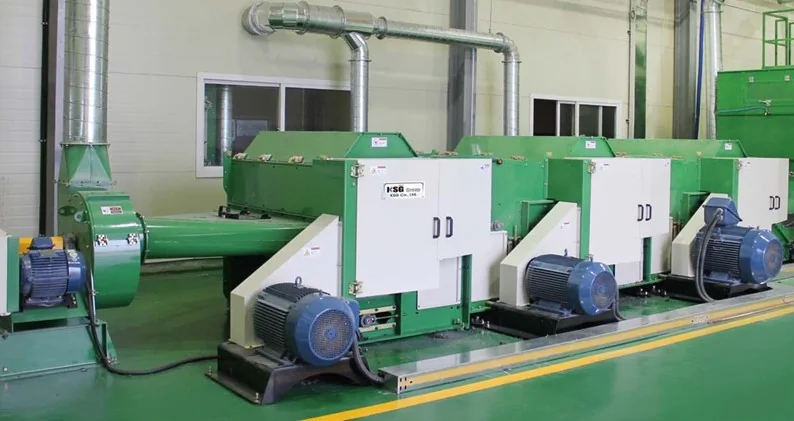
3-Mountain Waste Opener
Successive opening units for cotton and chemical-fiber waste.
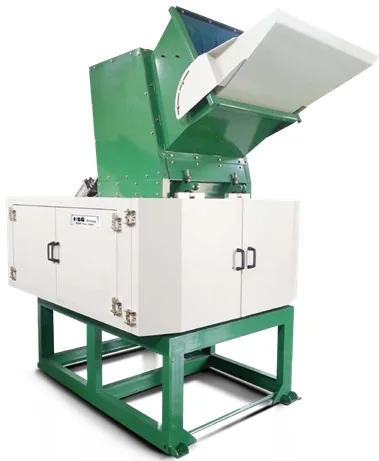
Choose equipment around representative waste samples and the intended reuse. Fiber composition, fabric construction, coatings, contamination, and the required finished form all affect the proposal. A pulverize cutter has a different purpose from a fiber-opening line and should not be treated as an interchangeable recovery stage.
Ready to integrate the Fiber Recycling Machinery Line?
Tell us your capacity requirements and material specs. Our engineering team will outline a precise equipment setup for your line.