
Pulverize Cutter
Waste crushing for a defined downstream use, not fiber opening.
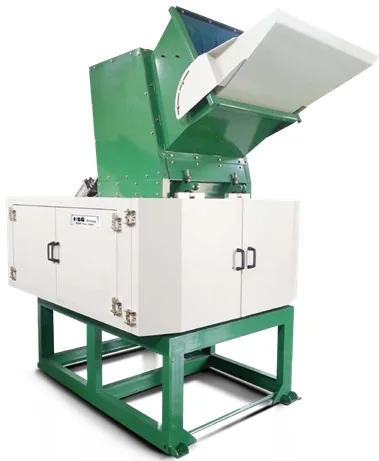
The source describes this machine for crushing waste rubber, sponge, plastic, textiles, and vinylon. It names power-plant thermal-energy use and cement production as intended applications; suitability for an actual receiving plant must be confirmed separately.
Pulverizing waste is not the same as recovering fibers for a felt line. Define the required output form and the receiver's acceptance criteria before choosing this machine.
The recycling brochure and the dated integrated catalogue use different model identifiers. No combined model-specific specification is published here. Request a current approved specification for the offered cutter, including dimensions, drives, cutting parts, and material-dependent output.
Send a representative sample and identify composition, contamination, moisture, and intended use. Confirm feeding, discharge, guarding, dust controls, maintenance access, and trial acceptance in the proposed scope.
How this stage contributes to the line
Useful recovery begins with the right cutting and opening duty. KSG's range separates textile-scrap cutting, progressive fiber opening and edge-trim recovery. The recycled-felt layout connects these operations to cleaning, storage, forming and drying, helping buyers discuss a complete reuse route.
Explore KSG's integrated engineering approach Textile Waste to Recycled FeltInformation that defines the right configuration
Equipment selection and pricing depend on the product, process, output, site, and supply scope. Prepare these points before requesting a technical proposal.
Product and application
End use, sample product, quality targets, roll or pack format, and required product range.
Raw materials
Fiber or polymer, blend, denier, staple length, additives, and material condition.
Output and dimensions
Target throughput, GSM range, finished and process width, tolerances, and changeovers.
Facility and utilities
Layout, clear height, access, power, heat, air, water, ventilation, and local standards.
Project and support scope
Automation, controls, installation, commissioning, training, acceptance, and spare parts.
Separate waste crushing from fiber recovery
The brochure names waste rubber, sponge, plastic, textiles, and vinylon for crushing associated with power-plant thermal-energy use and cement production. It does not establish receiving-plant approval or reusable-fiber quality.
Can the brochure model be matched to the website model?
Not reliably from the supplied documents alone. The brochure and integrated catalogue use different identifiers. Request the current model, approved specification, and material-dependent output before comparing equipment.
What should the buyer define first?
The waste composition, required output form, intended receiver, and acceptance criteria. Then confirm feeding, discharge, dust controls, guarding, maintenance access, and sample trials.
Sources: FIBER_RECYCLING_CARDAROG_1790837152410.pdf, p. 5 (publication date not stated); KSG_카다로그_2023.12.29일_1790837133001.pdf, p. 61 (filename date December 29, 2023; publication date not established). Model-specific numerical specifications are withheld because the identifiers differ.
Key Features
Source-described materials
Waste rubber, sponge, plastic, textiles, and vinylon are named in the brochure.
Distinct crushing duty
Use this machine for the agreed waste-reduction task, not as a substitute for a fiber opener.
Receiver-led selection
Confirm the receiving process's material and output requirements before equipment selection.
Model-specific review
Ask for the current model designation and approved specification rather than combining tables from different documents.
Applications
Interested in the Pulverize Cutter?
Contact our sales engineers to discuss integration, custom configurations, and pricing for your facility.