Carding Machine
Wire-clothed roller system that turns opened fiber into an even carded web.
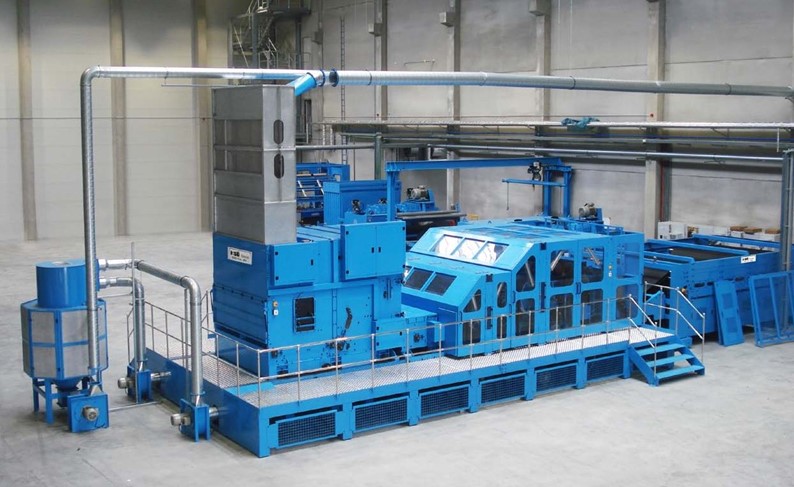
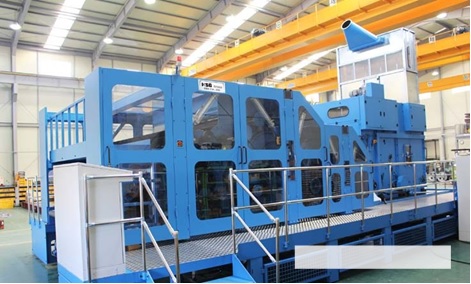
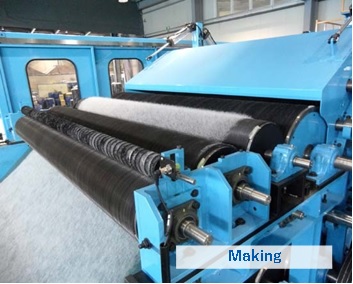
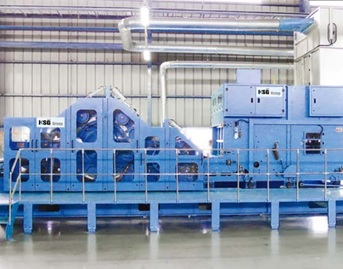
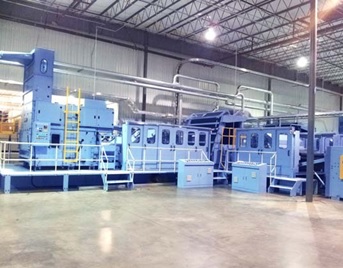
The carding machine is the heart of the line. It takes opened fiber and turns it into a uniform web ready for cross-lapping or direct bonding, using a train of rotating rollers clothed in metallic wire to disentangle, align and spread the stock evenly. The KS-HC 100DD is a high-output model that works with low to high denier fiber, synthetic or natural.
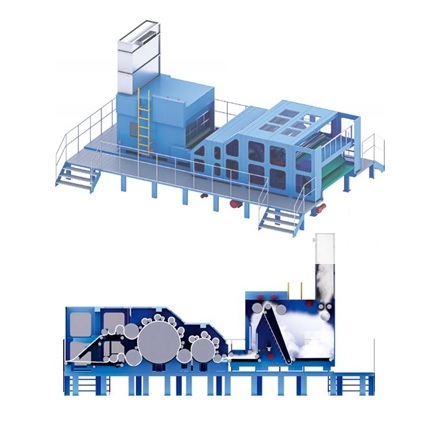
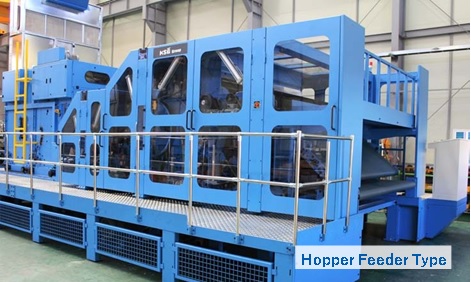
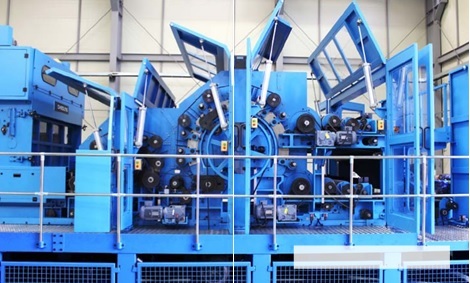
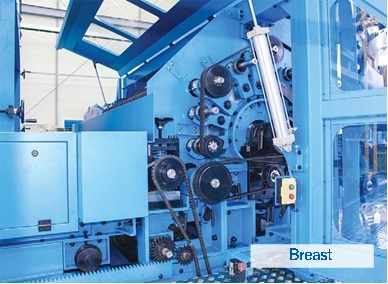
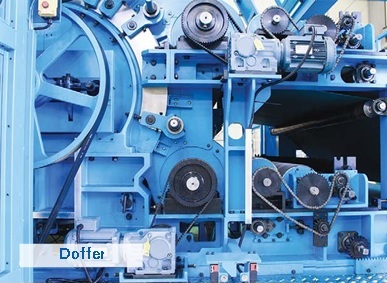
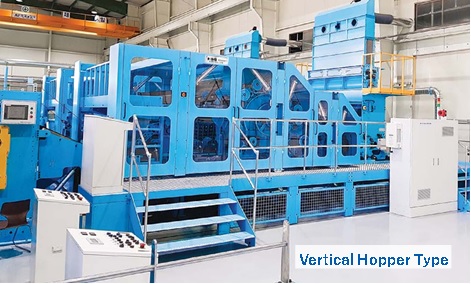
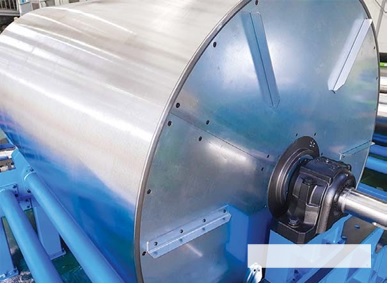
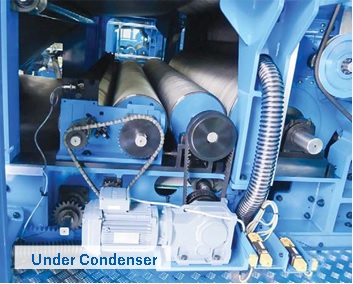
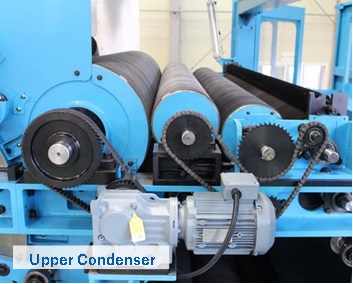
Fiber can be fed by hopper feeder type or vertical hopper type. From there it runs through the main cylinder, breast, doffer and condensers. Carding happens in two stages: coarse-wire rollers running slower first open and untangle the bundles, then fine-wire rollers running faster straighten the strands and refine the layer. The doffer hands the aligned fiber to the condenser, which forms either an equilibrium or a random web depending on the product.
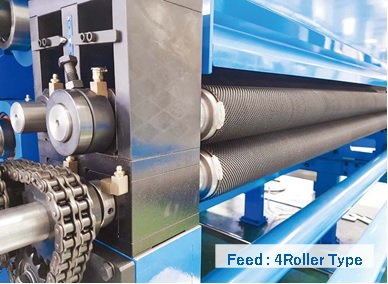
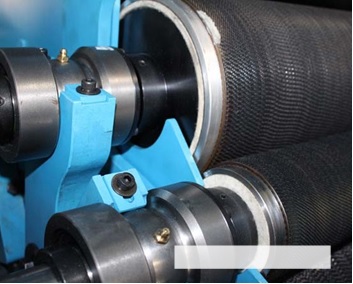
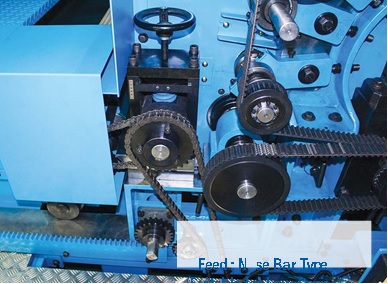
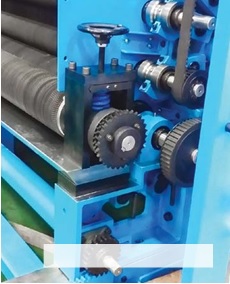
Wire choice follows the fiber. Coarse wire grips thick, high-denier stock; finer wire handles delicate low-denier fiber without damaging it. Feeding matches the same logic, 4-roller feed for high denier for a firmer, steadier grip, and nose bar feed for low denier for smooth flow without breakage. Every feed line carries a metal detector that stops the feed the instant it senses metal.
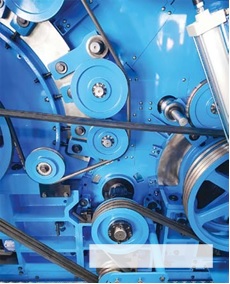
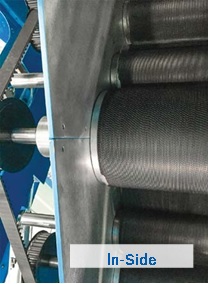
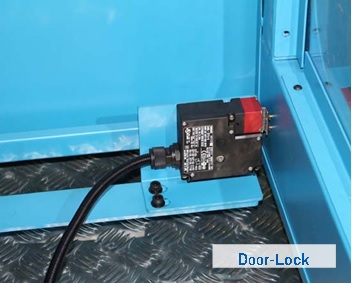
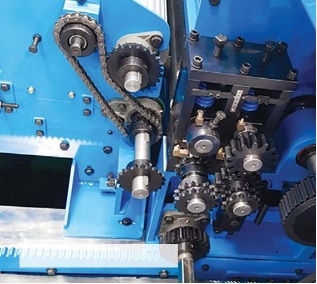
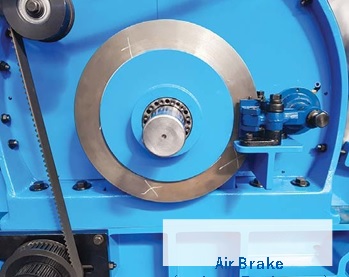
Drive and control are built for continuous running. EURO Drive motors give precise, quiet, stable carding speed; the inverter-based system synchronizes the whole line for smooth start-up and shutdown, and an interlock matches machine timing so the web is not torn between stages. Door locks and safety sensors stop the machine when a cover opens. Wool packing, in-side suction and a continuous suction system keep the carding area clean, recover loose fiber and hold quality through long runs.
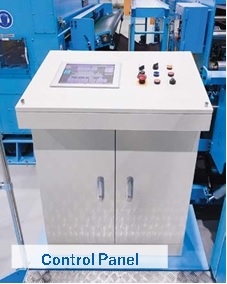
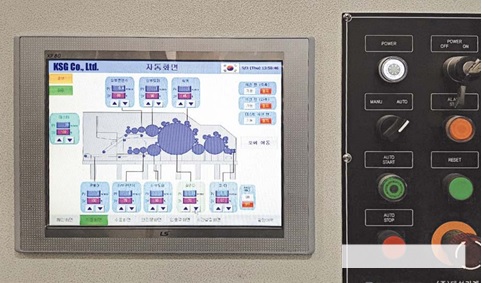
At the top end the main cylinder reaches a surface speed of 1,300 m/min, producing webs of 15 to 50 g/m² at up to 70 m/min. A touch-screen panel handles speed, suction and operating parameters.
Information that defines the right configuration
Equipment selection and pricing depend on the product, process, output, site, and supply scope. Prepare these points before requesting a technical proposal.
Product and application
End use, sample product, quality targets, roll or pack format, and required product range.
Raw materials
Fiber or polymer, blend, denier, staple length, additives, and material condition.
Output and dimensions
Target throughput, GSM range, finished and process width, tolerances, and changeovers.
Facility and utilities
Layout, clear height, access, power, heat, air, water, ventilation, and local standards.
Project and support scope
Automation, controls, installation, commissioning, training, acceptance, and spare parts.
Technical Specifications
Carding Machine model specifications (KS-HC 100DD)
| Specifications | HC80DD | HC100DD | HC120DD |
|---|---|---|---|
| Working Wide | 2000mm | 2500mm | 3000mm |
| Capacity | 350kg/Hr | 500kg | 650kg |
| Horse Power | 40.6Kw | 51.5Kw | 51.5Kw |
KS-C80DD — Standard & Hopper Feeder Type (Vibrate Hopper Feeder / Breast & Cylinder Roll / Two Doffer & Condenser)
| Specifications | C80DD | C100DD |
|---|---|---|
| Working Wide | 2000mm | 2500mm |
| Capacity | 230kg/Hr | 330kg/Hr |
Cross Direction & Hopper Feeder Scale Box Type (Scale Box Feeder / One Doffer & Roller Comb / Inter Conveyor cross direction)
| Specifications | C80DS | C100DS |
|---|---|---|
| Working Wide | 2000mm | 2500mm |
| Capacity | 160kg/Hr | 210kg/Hr |
Two Cylinder & Automatic Measuring Hopper Type (Automatic Measuring Feeder / Two Cylinder Roll / Two Doffer & Condenser)
| Specifications | C80DST | C100DST |
|---|---|---|
| Working Wide | 2000mm | 2500mm |
| Capacity | 270kg/Hr | 370kg/Hr |
Gallery
Key Features
Two-stage combing
Coarse-wire rollers open and untangle first, then fine-wire rollers straighten and align the fiber into an even layer.
Fiber-matched wire and feed
4-roller feed for high denier, nose bar feed for low denier, with wire tooth angle and density selected to the fiber.
Metal detection on every feed line
The feed stops automatically the moment metal is detected, preventing damage and contamination.
EURO Drive motors and inverter control
Precise, low-noise drives and line-synchronized inverter control give smooth start-up, shutdown and steady speed.
Interlock and safety system
Timing interlocks keep the web intact between machines; door locks and sensors stop operation when a cover opens.
Continuous suction and cleaning
Wool packing and in-side suction collect loose fiber and dust, keep the card clean and enable fiber recovery.
Web performance
Main cylinder surface speed of 1,300 m/min, web weight of 15 to 50 g/m², production up to 70 m/min.
Interested in the Carding Machine?
Contact our sales engineers to discuss integration, custom configurations, and pricing for your facility.