
Thermal Bonding Line Equipment for Car Interior Fabrics
Heat-set interior substrates with the stiffness and moldability trim shops rely on.
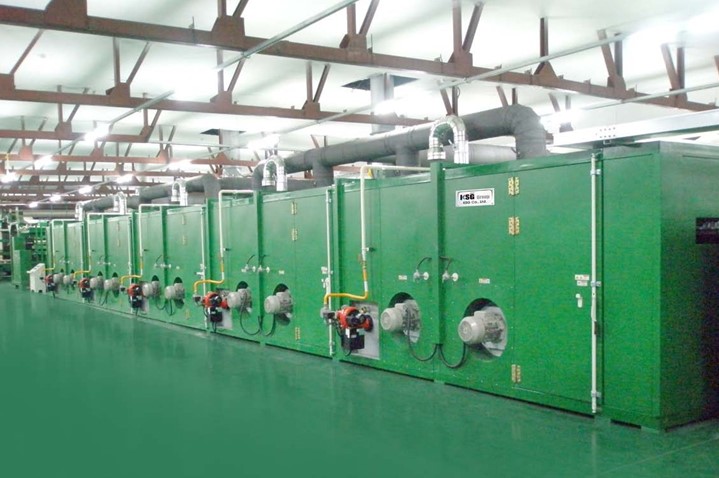
A lot of car interior fabric is bonded with heat rather than needles. Headliner substrates, door-panel and pillar trim, and many molded acoustic parts use a bicomponent or low-melt fiber that softens in a dryer and fuses the web into a self-supporting sheet. A thermal bonding line does that job, and getting the temperature profile and dwell time right is what separates a part that molds cleanly from one that delaminates or warps in the tool.
How the bonding line is built
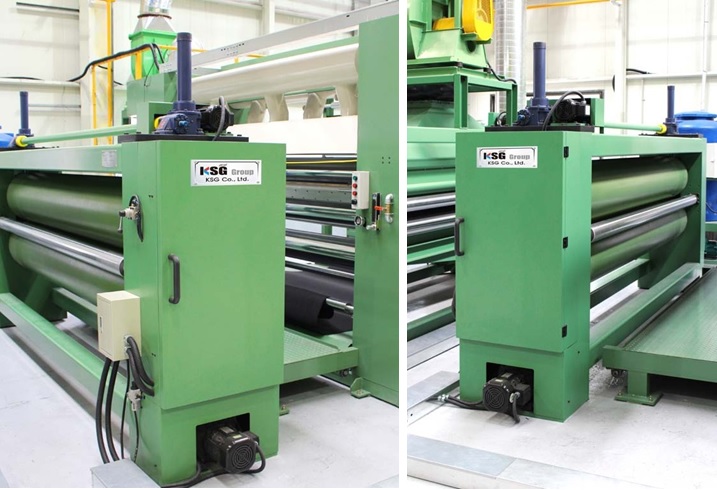
The front of the line is the same opening, carding, and cross-lapping sequence used across our automotive equipment. The difference sits in the bonding section. For loftier interior products we run the web through a through-air dryer so hot air passes through the full thickness and the low-melt fiber fuses evenly top to bottom. For denser or smoother substrates we use heated rolls, or a heating roll ahead of the dryer to set the surface and control caliper.
Temperature control is the heart of it. The dryer has to bring the whole web to the fiber's bonding point without scorching the surface, and on a moving web that means managing zone temperatures and airflow together. Our dryers are set up with independent zones so the profile can be tuned to the fiber blend and the target thickness.
Getting the part right
Caliper and stiffness are what the downstream molding shop cares about. Too little bonding and the substrate collapses in the tool; too much and it goes brittle and cracks on the tight radii of a headliner. During commissioning we run trial webs and check them against the customer's molding results, then lock in the dryer profile and the line speed that hit the window.
A cooling section after the dryer stabilizes the fused web before it is wound or cut, which stops the sheet from relaxing out of spec. We usually add a side cutter to trim to a clean, repeatable width, since interior blanks are cut to size and any edge variation is wasted material.
Line speed on a thermal bonding line is governed by dwell time in the dryer, not by the mechanical limit of the machine. Heavier or thicker interior substrates simply need more time at temperature, so we size the dryer length around the customer's slowest, thickest product to keep output steady across the range.
Energy and running cost
The dryer is the biggest energy user on a bonding line, so it is worth building well. We insulate the ovens, recover heat where the layout allows, and control the burners or heaters by zone so the line is only spending energy where the web needs it. Over a multi-shift automotive operation that difference adds up.
Maintenance on the bonding section is mostly belt tracking, seal checks, and keeping the airflow clean. We set the plant's crew up during installation with the inspection routine and the spare parts list, and the dryer belts and heating rolls are specified so replacements are a planned job rather than an emergency.
For headliner and molded trim substrates, KSG Group supplies the full thermal bonding line, from the carding and lapping section through the dryer, heating rolls, and cooling stage, and installs it as a turnkey plant. Share your fiber blend and part geometry and we will propose a dryer configuration and a delivery timeline.
Ready to integrate the Automotive Interiors?
Contact our sales engineers to discuss integration, custom configurations, and pricing for your facility.