
Shopping Bag and Packaging Nonwoven Line Equipment
One partner from line layout to commissioning for reusable-bag and packaging fabric.
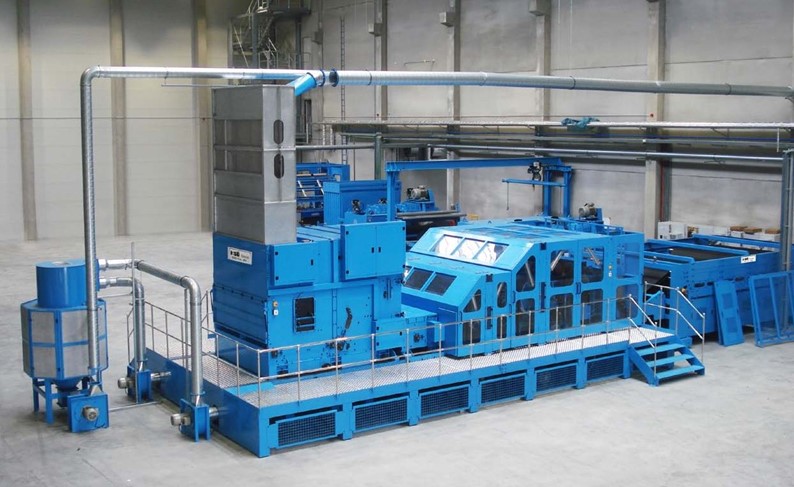
Reusable shopping bags are the volume product that put nonwovens on the map for a lot of converters, and demand has held up as single-use plastic bags get phased out market by market. The fabric itself is not complicated to make, but making it cheaply, consistently and at print-ready quality is where the equipment matters. This is a straightforward request for us: a shopping bag nonwoven machine is really a well-matched carding and bonding line with the finishing to match your bag-making machines downstream.
What the line actually needs to do
Bag fabric is usually spunbond in the very large mills, but for staple-fibre nonwoven bag stock the route is opening, carding, thermal or needle bonding, then calendering or light drying and winding. Web weights for tote and grocery bags typically land between 40 and 100 g/m2. The carding machine is the heart of it, since web evenness there decides how the fabric prints and how it holds a fold. We size the carding machine to the running speed you need and no more, because an oversized card just costs money and floor space.
For printed and laminated bag fabric the surface has to be flat and free of streaks. We pay attention to condenser settings and the transfer onto the forming belt, and we set up the line so the web tension stays even into the winder. Buyers usually ask about GSM consistency across the width, so we commission the line against a target and show you the cross-web profile before we sign off.
Fibre handling and recycled content
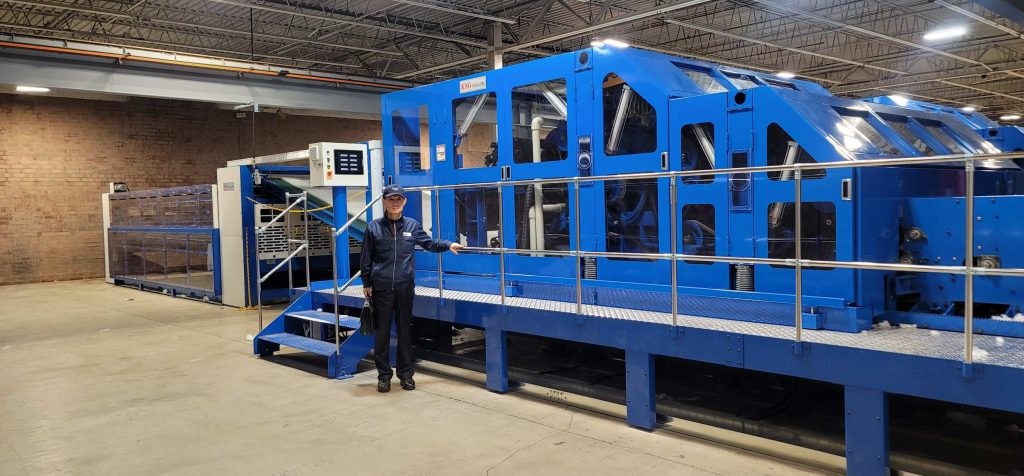
A lot of bag makers run recycled PP or PET to hit both cost and sustainability targets. Recycled fibre is dirtier and less uniform than virgin stock, so the opening and blending section has to work harder. We spec cylinder openers and blending capacity generously on these lines, because a well-opened, well-mixed lap is what keeps the carding machine from choking and keeps web weight steady.
Where a customer generates a lot of edge trim from bag cutting, we can tie a rotary cutter and waste opener back into the feed so that trim goes straight back into the blend instead of into a skip. It is a small piece of equipment that quietly improves your material yield over a year.
Building and installing the plant
When someone is setting up a packaging nonwoven line from scratch, the questions are usually about floor space, power, and how long from order to first roll. We build the machinery in Korea, ship it, and send our own engineers to install and commission. A line of this size normally goes from delivery to running product in a matter of weeks once the building services are ready, though that depends on your site.
We have done this factory setup in more than 40 countries, so we plan around the practical realities: getting machines through the door, aligning long conveyors on an uneven floor, tuning the drive so the whole line accelerates together. Commissioning is not finished, in our view, until your operators can run a weight change and a shift changeover without us in the room.
If you are pricing a shopping bag line or a broader packaging nonwoven plant, KSG Group can supply and install the whole thing and back it with 30-plus years of building this exact kind of equipment. Tell us your bag weights, widths and daily output and we will lay out a line to match.
Related equipment
Related Technology Guides
Ready to integrate the Packaging & Daily-Life Goods?
Contact our sales engineers to discuss integration, custom configurations, and pricing for your facility.