
Diaper and Sanitary Napkin Nonwoven Line Setup for Hygiene Factories
Carded and bonded nonwoven lines for absorbent-core carriers and coverstock in diaper and napkin plants.
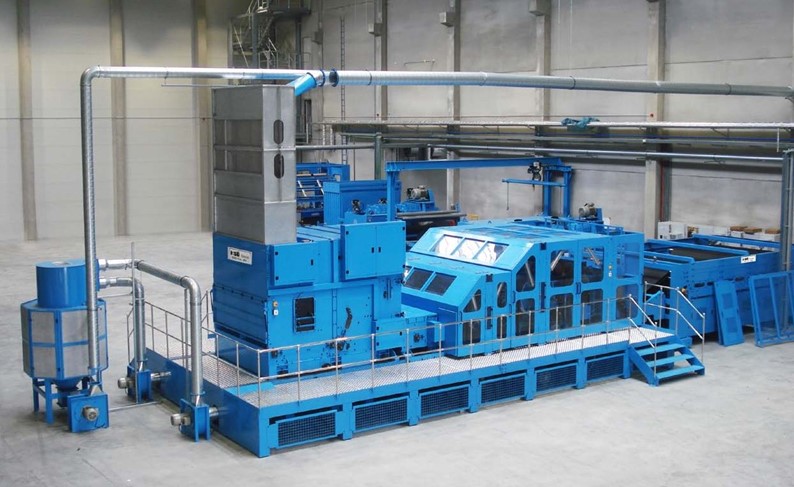
Not every hygiene component is spunbond. A lot of the acquisition-distribution layers, core wraps and softer coverstocks in diapers and sanitary napkins are made from staple fibre on a carded line. When a converter wants to bring that fabric in-house, what they are really buying is a diaper nonwoven line or a sanitary napkin nonwoven line built around carding, web forming and bonding, and that is squarely in KSG's wheelhouse.
Building the web: carding and cross lapping
The heart of a carded hygiene line is the carding machine. It opens and aligns the staple fibre into a uniform web, and its condition sets the ceiling on how good your finished fabric can be. For fine hygiene fibres we specify the feed, cylinder and doffer sections to suit low-denier blends, because a card set up for heavy geotextile fibre will not give you a clean lightweight coverstock.
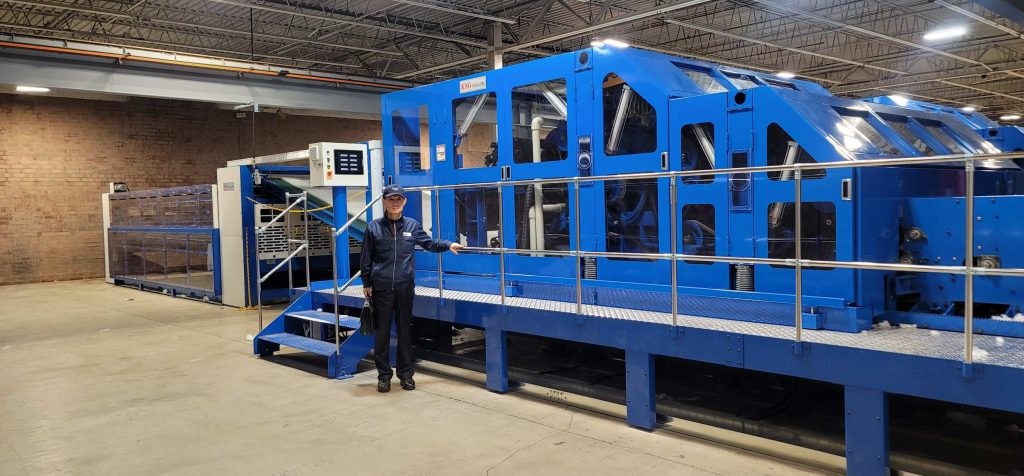
After carding, a cross lapper builds the web up to the target weight and width while controlling the fibre orientation. Our HS cross lapper is designed to lay evenly at the speeds a hygiene nonwoven machine needs, which keeps the basis weight steady and cuts the trim waste at the edges. Those two machines together decide most of what the customer will see in the finished roll.
Bonding, drying and finishing
Depending on the product, the laid web is consolidated by thermal bonding, resin bonding or light needle punching. For softer diaper and napkin layers we often pair the line with our dryers and, where a chemical binder is used, a resin padding dryer to cure it without scorching or stiffening the fabric. Drying is where a surprising amount of energy cost and line speed is won or lost, so we size the dryer to the line rather than treating it as an afterthought.
Trimming and slitting finish the job. A cross cutter or side cutter squares the web and takes the edges to a clean width for the converting line downstream. None of these steps is exotic on its own, but the value is in having them specified and timed to work as one line, which is what we deliver.
Setting the line up in your factory
Standing up a diaper or napkin nonwoven line is as much a site project as a machinery purchase. We provide the layout, install the equipment and commission it with our own engineers, so the customer is not left coordinating a handful of separate vendors during start-up. With plants running in over 40 countries, we are used to adapting a line to the space, power and climate a given factory actually has.
A practical benefit buyers often overlook: because we build the core machines, aftermarket parts and technical support come from the people who made the line. When a card clothing needs replacing or a bonding oven needs tuning a year in, the support chain is short. That keeps unplanned downtime low, which for a hygiene plant feeding continuous converting lines is what really protects the margin.
Tell us which hygiene products you convert and the volumes you need, and KSG will design the carded diaper or sanitary napkin nonwoven line to match, supply the carding, lapping, bonding and drying equipment, and install it in your plant.
Related Technology Guides
Ready to integrate the Hygiene Products?
Contact our sales engineers to discuss integration, custom configurations, and pricing for your facility.