
Spunbond Nonwoven Line: A Buyer's Guide and How It Differs From Dry-Laid Lines
What a spunbond line actually is, and how to decide between it and the dry-laid staple-fibre lines KSG builds.
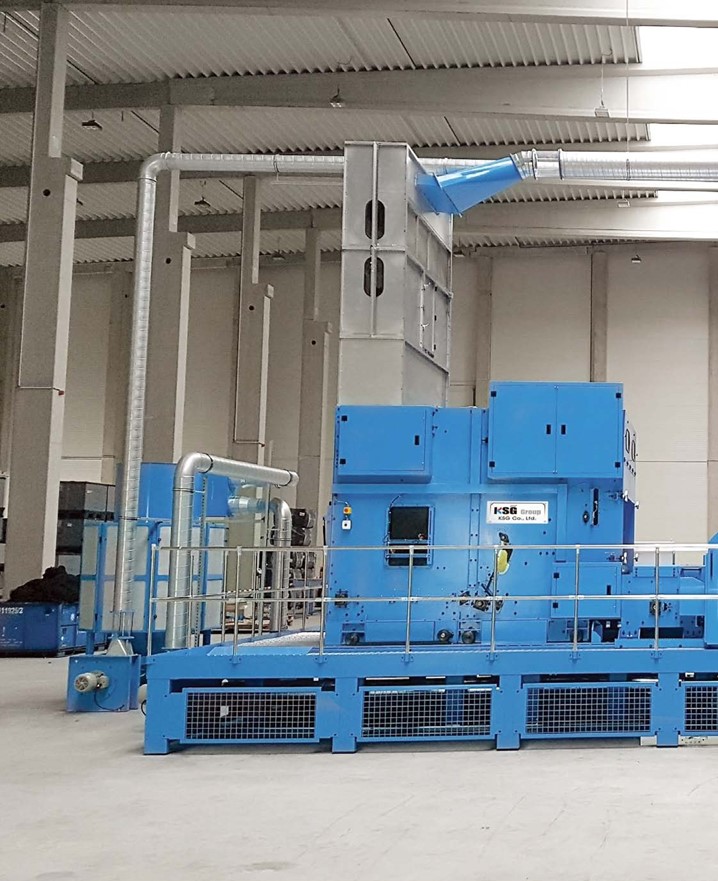
If you are searching for a spunbond nonwoven line, it helps to be clear about what that machine does before you compare quotes. Spunbond is a polymer-extrusion process: molten resin is spun into continuous filaments, drawn, laid onto a belt and bonded straight into fabric. That is a very different animal from the dry-laid staple-fibre lines KSG designs and builds. We do not manufacture spunbond extrusion systems, so this page is a straight guide rather than a sales pitch, written to help you work out which route your product actually needs.
How a spunbond line makes fabric
A spunbond non woven fabric machine starts from polymer pellets, usually polypropylene or polyester. The resin is melted, forced through a spinneret into fine continuous filaments, cooled and drawn by high-velocity air, then laid down as a random web on a moving belt. The web is consolidated in one continuous step, most often by heated calender rolls that spot-bond the filaments together. Because the fabric is born straight out of the extruder, a spunbond production line is essentially a single connected machine from resin hopper to winder.
The economics follow from that. Spunbond suits high-volume, lightweight webs in the roughly 8 to 60 gsm range at high belt speeds, and it runs cheapest when it runs continuously on one polymer at one weight. Changeovers are not trivial, so the process rewards long runs of a stable product. That is why you see spunbond dominating disposable coverstock, medical drape stock, and barrier layers rather than heavier engineered fabrics.
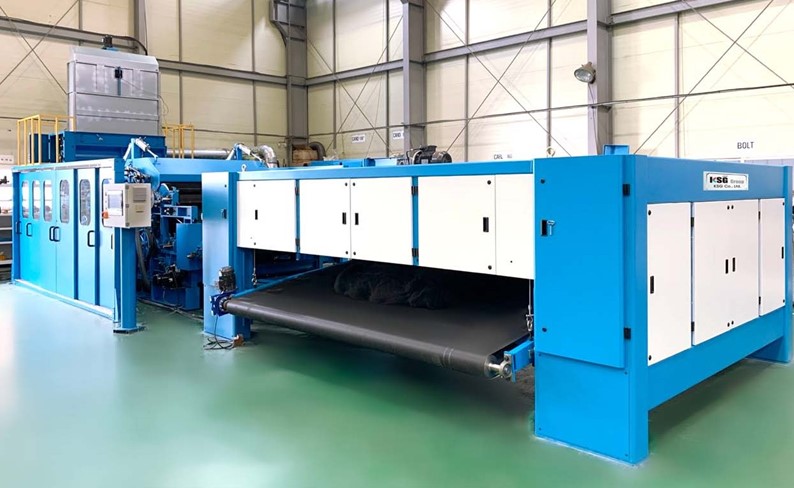
Spunbond versus the dry-laid lines KSG builds
KSG builds dry-laid staple-fibre lines. Instead of extruding filaments, these lines start from baled cut fibre that is opened, blended, fed through a carding machine, layered by an HS cross lapper, and then bonded by needle punching, thermal bonding or a bonding dryer line. The web weight range is far wider and heavier, changeovers between fibre blends and weights are quicker, and you can run recycled and blended fibres that a spunbond extruder simply cannot process.
The practical dividing line is the product. If you need very light, uniform, single-polymer webs at high speed for disposables, spunbond is usually the right tool. If you need weight, loft, mechanical strength, blended or recycled fibre content, or a specialty structure like automotive velour or geotextile, a carded and needled dry-laid line is the better fit. Neither process is a substitute for the other; they serve different fabric families.
One more honest point on capital: a spunbond production line is a large, tightly coupled extrusion investment tied to one polymer strategy. A dry-laid line is more modular, so you can start with a carding and cross lapping section and add needle punching machine capacity or a heating roll and dryer stage as demand grows. That flexibility matters when a buyer is not yet sure of the final product mix.
When buyers actually need spunbond
In commissioning conversations the deciding questions are almost always the same. What weight do you sell, how uniform does it need to be, and how many product changes per week will you run? If the answers point to sub-30 gsm coverstock at high volume on a single resin, spunbond earns its place and you should be talking to an extrusion-line builder.
But a lot of buyers who type spunbond nonwoven line into a search bar are really after filter media, felts, geotextiles, insulation, wipes carriers or automotive interior fabric. Those are staple-fibre territory, and a spunbond machine would be the wrong purchase. It is worth pressure-testing the requirement against the finished-fabric spec before committing to a polymer-extrusion route, because the two processes are hard to convert between later.
Where KSG fits
KSG supplies complete dry-laid staple-fibre lines end to end: fibre opening and blending, the carding machine and hopper feeder, the HS cross lapper, needle punching machine and velour needle loom stations, thermal bonding and the bonding dryer line, fibre recycling, and downstream side, cross and rotary cutter and packing sections. We engineer, build and install these lines and commission them with our own team.
So if your product genuinely calls for spunbond extrusion, we are not the manufacturer for that part, and we will say so plainly. Where we can help is any dry-laid nonwoven you produce alongside it, and any staple-fibre finishing, needling or cutting you need. If you are weighing carded and needled fabric against a spunbond route, send us the finished-fabric spec and we will tell you honestly whether a dry-laid line is the better answer.
KSG does not build spunbond extrusion systems, so we will not pretend otherwise. What we do supply is complete dry-laid staple-fibre lines, from opening and carding through cross lapping, needle punching, bonding, drying and cutting, installed and commissioned by our own engineers. If your fabric belongs on a carded and needled line, send us the spec and target output and we will design the line to suit.
Related equipment
Ready to integrate the Spunbond?
Contact our sales engineers to discuss integration, custom configurations, and pricing for your facility.