
Spunlace Line Equipment for Medical Nonwovens
Soft, low-lint, absorbent webs for wound care, wipes and drapes.
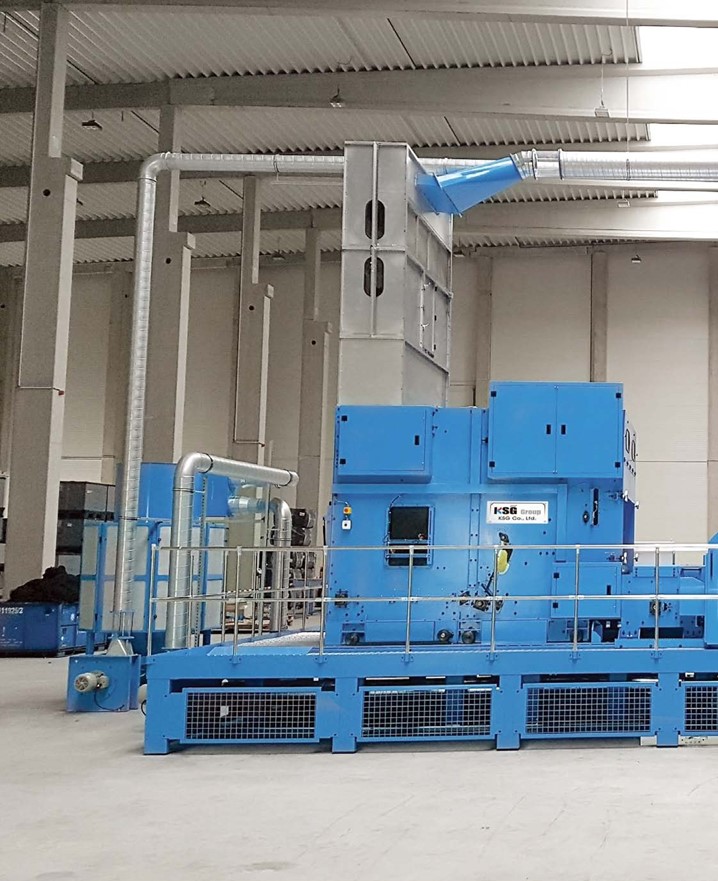
Spunlace, or hydroentangled, fabric is the workhorse of the medical nonwoven world. It bonds the web with fine water jets instead of chemicals, which is exactly why wound dressings, cleansing wipes and single-use drapes are made this way. The fabric stays soft, releases very little lint, and takes up fluid well. Getting there depends far more on the dry-forming section than most first-time buyers expect, and that is where a KSG spunlace line earns its keep.
The web is made before the water ever touches it
People tend to focus on the hydroentanglement manifolds, but the uniformity of a spunlace fabric is decided upstream, at the card. If the carded web has streaks or weight variation across the width, no amount of jet energy will hide it. We build our carding machine with the doffer and condenser arrangement specifically so the fiber lays down evenly at low basis weights, which is where medical products live, often in the 30 to 70 gsm range.
Ahead of the card sits the opening and blending line. Medical spunlace usually runs viscose, polyester, or a viscose and polyester blend, and the fibers have to be opened gently and mixed thoroughly before they reach the feed. Our fine opener and mixing feeders do that work without breaking or nepping the fiber, because neps show up as hard spots in a thin web.
Cross lapping and the case for staple lines
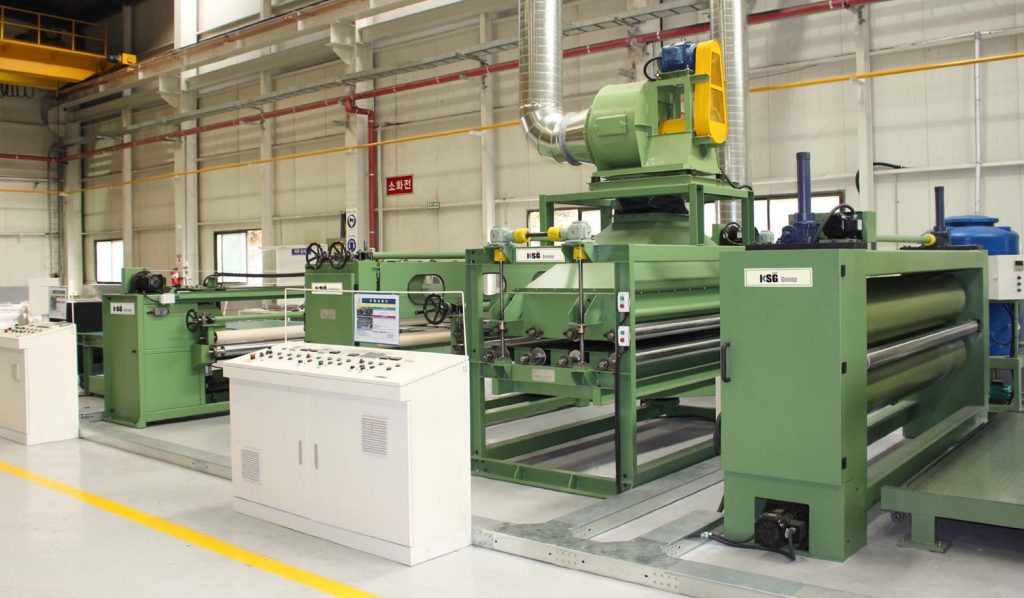
For many medical grades a carded, cross-lapped web gives the strength profile buyers want, with fibers oriented in both directions rather than mostly in the machine direction. Our cross lapper lays the card web back and forth to build up weight and to balance MD and CD strength, which is what stops a drape from tearing along one axis when a surgeon pulls it taut.
We are candid with customers that a full high-pressure hydroentanglement section is a large capital item, and we scope it to the output that is actually planned rather than overselling capacity that sits idle. Where the project calls for it, the staple-fiber preparation line we supply feeds straight into that section, so the medical nonwoven line runs as one continuous set of machines.
Drying without cooking the fabric
After hydroentanglement the web is soaked, and how you dry it changes the final hand. Push the temperature too hard to gain line speed and the fabric goes stiff and boardy, which is the last thing you want against skin. Our through-air dryers are sized so the web dries at a controlled rate, and the heat-flow path is set up to keep the surface soft while still pulling the moisture out.
We have installed enough of these lines to know that drying is usually the stage that limits throughput on a spunlace line, so we would rather right-size the dryer at the quotation stage than have a customer discover a bottleneck at commissioning. KSG Group supplies the opening line, carding, cross lapping, and drying as a matched set, and our engineers commission the whole thing on site.
If you are specifying a spunlace line for wound care, wipes or drapes, talk to KSG Group early, while the fabric spec is still flexible. We will lay out the medical nonwoven line equipment around your target grades and output, build it in Korea, and install it in your plant. Thirty years of nonwoven engineering, one accountable partner.
Ready to integrate the Medical?
Contact our sales engineers to discuss integration, custom configurations, and pricing for your facility.